


Pulse Gen ZX Premier By Audio Magic
- Item #:
- Reviews
- | Write a Review


Product Summary:
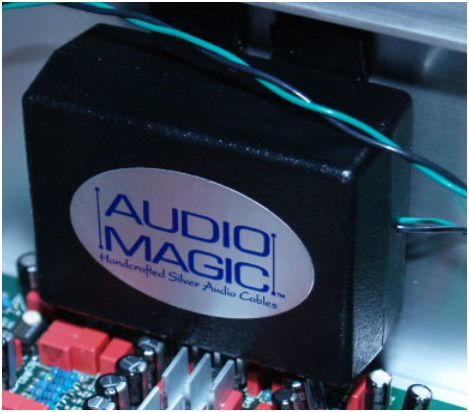
The Audio Magic Pulse Gen ZX Premier radiates a field inside the enclosure of a component that neutralizes low-level noise being emitted by the electronic components into your sound.
..... Click To Read MoreTrial Period
21 Days
Countries Shipped
Worldwide
Burn-In Time
20 Hours
Includes Fly-In Setup and Installation!
Fly-in is limited to locations reasonably accessible to commercial air travel.
Learn More

Have Questions? 844-462-8346
Call our experts for product info and advice or chat now with a specialist.
Price:
Audio Magic, Tweak Devices
Pulse Gen ZX Premier By Audio Magic
$600
The Audio Magic Pulse Gen ZX Premier radiates a field inside the enclosure of a component that neutralizes low-level noise being emitted by the electronic components into your sound.
..... Click To Read MoreProduct Description
The Pulse Gen ZX is a proven upgrade used in the renowned Jaguar Reference System, and it is selected as standard equipment in certain components from ModWright Instruments.
The latest Premier model delivers twice the output of the original version, offering even greater performance potential.
The review below outlines what you can expect when integrating the Pulse Gen ZX into your system. Installation is flexible: the unit can be connected directly to a component’s 120V or 240V internal power supply, or you can begin by attaching the leads to a standard lamp cord. Starting with a lamp cord setup makes it easy to evaluate the benefits across different components before committing to an internal installation.
For best results, experiment with placement in power conditioners, DACs, amplifiers, and preamplifiers to determine where it provides the greatest improvement in your system.
Note: The Pulse Gen should not be mounted inside components that get too warm, to avoid melting the plastic enclosure.
Reviews
Read the Pulse Gen ZX review, originally published in the online audio magazine, Positive Feedback:
Ah… yes the Pulse Gen ZX from Audio Magic. This is a small plastic box (1.75″ x 2.75″ x 1″) that is to be soldered (or connected however floats your boat) to a component’s internal IEC connection. That means it goes inside whatever you want, in order to hear whatever it does. I soldered alligator clips to the wire’s ends (you have a good 18″ or so to play with) allowing the ability to remove them for the audition (also allows for easy removal — the ol‘ in and out routine to assess their affect). Besides the Cary 306 and EMM CDSE both feature slide on style connectors for the AC wiring for the IEC, so I was not about to solder something in that may not be a winner.
Placement is rather moot as the Pulse Gen ZX is small enough to be located wherever it is out of harms way. Meaning that using some Velcro or whatever will hold it snug and that being plastic means it is not conductive, so worry about shorting something out. The actual placement though seems to have no impact on what it does to the component’s sound …err music being played. Though of course the lid needs to be in place so it can do its magic. Break-in is a rather short 30 minutes — now that is refreshing.
Jerry will not disclose what is inside or what is really going on with the Pulse Gen ZX. Jerry tends to not want to share what he has learned from years of experimenting in how to get things dead quiet. Can’t blame him for that as that is how he pays his bills, but what he will say is that they are designed to eliminate noise generated by a component’s circuit and whatnot; how is the $64k question. No, they are not the same as the RGC-24, in that the Pulse Gen ZX is clearly an active item — it runs off the AC, though they might be out to do similar things (EMI/RFI eliminators). And no, it is not an AC filter. The need for AC connection is to provide the Pulse Gen ZX with juice to generate a field that is supposed to neutralize any RFI/EMI being generated inside the component. Of course the question is, do I still need to use something like the Shakti Stones, Quantum Physics’ Noise Disrupter, or even the RGC-24? Well… according to Jerry, the Pulse Gen ZX only works on what is going on on the inside, so the other three can address then what is going on on the outside. After all there is a boatload of RFI/EMI flying around in the free air …something has to clean that up too! Oh, and you still need to clean the AC!
What I do know is that when placed inside the EMM CDSE, things get really, really good. The EMM takes on a fuller, richer sound with no hint of an aggressive nature—something that the EMM tends to possess to an audible degree. If you read my review of the EMM, you will find that I had some reservations; simply put, the player lacked a richness in tonal color as well as a desirable (by me at least) ease or naturalness to the music — all found in the Cary 306. Yes, it is a stellar player — I own it and use 50% of the time (the other 50% is with the Cary 306)—but it tends to be more ever-so-slightly viscerally upfront than I prefer. Too many discs just don’t move me as heard from the Cary. On the other hand the Cary lacks the speed, dynamics, slam, and …well the visceral-ness of the EMM. Even so, Carol loves the EMM over the Cary, and with the Jena Lab One AC cord on the EMM, it is now much closer to what I want 100% of the time.
In comes the Pulse Gen ZX and WOW …Cary on steroids. Music is smoother (in the sense of being more naturally resolving as opposed to being slightly overly so), less edgy or aggressive, but with no sonic fallbacks. What I mean is that the player’s strengths are still there; it is still the EMM CDSE with all that that brings to the table (can you say tonal neutrality and linearity?). See, with the Pulse Gen ZX there is nothing being taken away sonically. Well, actually no, the Pulse Gen ZX does take away the crap that was holding the EMM back. With the Pulse Gen ZX, the EMM is as good as the Cary is in how the Cary is so very, very good. No, it does not sound just like the Cary; the EMM still retains its own inherent character, it is just that its strengths are magnified and any weaknesses or shortcomings are cleanly obliterated. Music now has a greater sense of natural quietness while still possessing a beguiling expressiveness — it swings and sings. For lack of a better word, this sense of calm and quiet within the music allows it to be way more open and expansive. The midrange is richer and fuller: there is now more color to them bones. This is simply way better. Stupid better actually. Wow.
Hey let’s try one in the Cary and see what happens., but the problem is that while it warms up the EMM by giving it more tonal color and naturalness, what worries me is that sonically that is not what the Cary needs. Those qualities are the player’s strengths. Move the Cary further in that direction and we are in trouble here. No, what it does is to simply make the Cary sound like a way better Cary 306. With the Pulse Gen ZX, there is less obstruction of the details and whatnot that was keeping us from hearing it all — that is you get more resolution; something that many criticize the Cary of not having enough of, especially when compared to the likes of the EMM CDSE. With the Gen ZX, the Cary portrays music with less of the player’s inherent tonal darkness that is heard by some as an overly rich tonality or in being too warm-ish. Yeah, the Cary is now better; you get way more of the Cary’s strengths and way less of what was in the way. It is faster, more visceral, and with more quietness-ness and calm between the notes — just like I hear in the EMM. You hear more of the Cary and less of the crap.
In listening to these two components with the Pulse Gen ZX, it is really difficult to put into words what is really going on. I have communicated as clearly and as succinctly as I can what I, and others, have heard from the EMM and Cary players with a Pulse Gen ZX. The problem is that the Pulse Gen ZX is not additive, meaning it is not adding anything into or onto the sonic tapestry. It does not change how your stuff sounds by adding to, or modifying anything in, the signal. The Pulse Gen ZX requires a new vocabulary in how it is ultimately subtractive — in what it takes away from the sonic tapestry. There is a greater sense of emptiness and space between the notes and frequencies, there is simply way less of the crap and stuff that hinders a component from sounding as it really should sound. You get to hear the music, all of the music. Well, all that the component is capable of reproducing. I don’t see the Pulse Gen ZX being a fix-all for something that simply does not sound that good to being with. It simply ain’t going to fix any character flaws by cleaning up the EMI/RFI that is mucking up the play. On the other hand, it will reveal the ultimate beauty being hidden in truly stellar products. If you think your gear sounds good now, well …you got to hear it with a Pulse Gen ZX. I am going to try these in the Claytons and the Cary SLP-05 as soon as I can get my hands on three more, but till then the Pulse Gen ZX is highly recommended.
–By Dave Clark, positive-feedback.com
Know more details about products
The Pulse Gen ZX is a proven upgrade used in the renowned Jaguar Reference System, and it is selected as standard equipment in certain components from ModWright Instruments.
The latest Premier model delivers twice the output of the original version, offering even greater performance potential.
The review below outlines what you can expect when integrating the Pulse Gen ZX into your system. Installation is flexible: the unit can be connected directly to a component’s 120V or 240V internal power supply, or you can begin by attaching the leads to a standard lamp cord. Starting with a lamp cord setup makes it easy to evaluate the benefits across different components before committing to an internal installation.
For best results, experiment with placement in power conditioners, DACs, amplifiers, and preamplifiers to determine where it provides the greatest improvement in your system.
Note: The Pulse Gen should not be mounted inside components that get too warm, to avoid melting the plastic enclosure.
Read the Pulse Gen ZX review, originally published in the online audio magazine, Positive Feedback:
Ah… yes the Pulse Gen ZX from Audio Magic. This is a small plastic box (1.75″ x 2.75″ x 1″) that is to be soldered (or connected however floats your boat) to a component’s internal IEC connection. That means it goes inside whatever you want, in order to hear whatever it does. I soldered alligator clips to the wire’s ends (you have a good 18″ or so to play with) allowing the ability to remove them for the audition (also allows for easy removal — the ol‘ in and out routine to assess their affect). Besides the Cary 306 and EMM CDSE both feature slide on style connectors for the AC wiring for the IEC, so I was not about to solder something in that may not be a winner.
Placement is rather moot as the Pulse Gen ZX is small enough to be located wherever it is out of harms way. Meaning that using some Velcro or whatever will hold it snug and that being plastic means it is not conductive, so worry about shorting something out. The actual placement though seems to have no impact on what it does to the component’s sound …err music being played. Though of course the lid needs to be in place so it can do its magic. Break-in is a rather short 30 minutes — now that is refreshing.
Jerry will not disclose what is inside or what is really going on with the Pulse Gen ZX. Jerry tends to not want to share what he has learned from years of experimenting in how to get things dead quiet. Can’t blame him for that as that is how he pays his bills, but what he will say is that they are designed to eliminate noise generated by a component’s circuit and whatnot; how is the $64k question. No, they are not the same as the RGC-24, in that the Pulse Gen ZX is clearly an active item — it runs off the AC, though they might be out to do similar things (EMI/RFI eliminators). And no, it is not an AC filter. The need for AC connection is to provide the Pulse Gen ZX with juice to generate a field that is supposed to neutralize any RFI/EMI being generated inside the component. Of course the question is, do I still need to use something like the Shakti Stones, Quantum Physics’ Noise Disrupter, or even the RGC-24? Well… according to Jerry, the Pulse Gen ZX only works on what is going on on the inside, so the other three can address then what is going on on the outside. After all there is a boatload of RFI/EMI flying around in the free air …something has to clean that up too! Oh, and you still need to clean the AC!
What I do know is that when placed inside the EMM CDSE, things get really, really good. The EMM takes on a fuller, richer sound with no hint of an aggressive nature—something that the EMM tends to possess to an audible degree. If you read my review of the EMM, you will find that I had some reservations; simply put, the player lacked a richness in tonal color as well as a desirable (by me at least) ease or naturalness to the music — all found in the Cary 306. Yes, it is a stellar player — I own it and use 50% of the time (the other 50% is with the Cary 306)—but it tends to be more ever-so-slightly viscerally upfront than I prefer. Too many discs just don’t move me as heard from the Cary. On the other hand the Cary lacks the speed, dynamics, slam, and …well the visceral-ness of the EMM. Even so, Carol loves the EMM over the Cary, and with the Jena Lab One AC cord on the EMM, it is now much closer to what I want 100% of the time.
In comes the Pulse Gen ZX and WOW …Cary on steroids. Music is smoother (in the sense of being more naturally resolving as opposed to being slightly overly so), less edgy or aggressive, but with no sonic fallbacks. What I mean is that the player’s strengths are still there; it is still the EMM CDSE with all that that brings to the table (can you say tonal neutrality and linearity?). See, with the Pulse Gen ZX there is nothing being taken away sonically. Well, actually no, the Pulse Gen ZX does take away the crap that was holding the EMM back. With the Pulse Gen ZX, the EMM is as good as the Cary is in how the Cary is so very, very good. No, it does not sound just like the Cary; the EMM still retains its own inherent character, it is just that its strengths are magnified and any weaknesses or shortcomings are cleanly obliterated. Music now has a greater sense of natural quietness while still possessing a beguiling expressiveness — it swings and sings. For lack of a better word, this sense of calm and quiet within the music allows it to be way more open and expansive. The midrange is richer and fuller: there is now more color to them bones. This is simply way better. Stupid better actually. Wow.
Hey let’s try one in the Cary and see what happens., but the problem is that while it warms up the EMM by giving it more tonal color and naturalness, what worries me is that sonically that is not what the Cary needs. Those qualities are the player’s strengths. Move the Cary further in that direction and we are in trouble here. No, what it does is to simply make the Cary sound like a way better Cary 306. With the Pulse Gen ZX, there is less obstruction of the details and whatnot that was keeping us from hearing it all — that is you get more resolution; something that many criticize the Cary of not having enough of, especially when compared to the likes of the EMM CDSE. With the Gen ZX, the Cary portrays music with less of the player’s inherent tonal darkness that is heard by some as an overly rich tonality or in being too warm-ish. Yeah, the Cary is now better; you get way more of the Cary’s strengths and way less of what was in the way. It is faster, more visceral, and with more quietness-ness and calm between the notes — just like I hear in the EMM. You hear more of the Cary and less of the crap.
In listening to these two components with the Pulse Gen ZX, it is really difficult to put into words what is really going on. I have communicated as clearly and as succinctly as I can what I, and others, have heard from the EMM and Cary players with a Pulse Gen ZX. The problem is that the Pulse Gen ZX is not additive, meaning it is not adding anything into or onto the sonic tapestry. It does not change how your stuff sounds by adding to, or modifying anything in, the signal. The Pulse Gen ZX requires a new vocabulary in how it is ultimately subtractive — in what it takes away from the sonic tapestry. There is a greater sense of emptiness and space between the notes and frequencies, there is simply way less of the crap and stuff that hinders a component from sounding as it really should sound. You get to hear the music, all of the music. Well, all that the component is capable of reproducing. I don’t see the Pulse Gen ZX being a fix-all for something that simply does not sound that good to being with. It simply ain’t going to fix any character flaws by cleaning up the EMI/RFI that is mucking up the play. On the other hand, it will reveal the ultimate beauty being hidden in truly stellar products. If you think your gear sounds good now, well …you got to hear it with a Pulse Gen ZX. I am going to try these in the Claytons and the Cary SLP-05 as soon as I can get my hands on three more, but till then the Pulse Gen ZX is highly recommended.
–By Dave Clark, positive-feedback.com

Reviews
There are no reviews yet.